The Real Reason Small Businesses in Illinois Are Turning to AI Automation
Bridget runs a salon. On a busy Tuesday, her front desk is juggling clients in chairs, clients calling in, and clients messaging on the website wanting to know if they're open on Saturday. She can't answer all of it fast enough. People move on.
That's the actual problem AI automation solves - not a vague promise about efficiency, but a very specific gap between the questions customers have and the speed at which a small team can answer them.
We built Bridget's salon, Shear Excellence, a Live AI chat solution. Now it answers questions instantly, around the clock, without pulling her staff away from the people already in the room. Her salon averages 500 guests a month. She told us it's been a game-changer - and for once, we're okay quoting someone who used that word, because she earned it.
What AI Automation Actually Looks Like in a Small Business
When most business owners hear 'AI automation,' they picture enterprise software that costs a fortune and takes six months to implement. That's not what we do. What we build is practical and immediate.
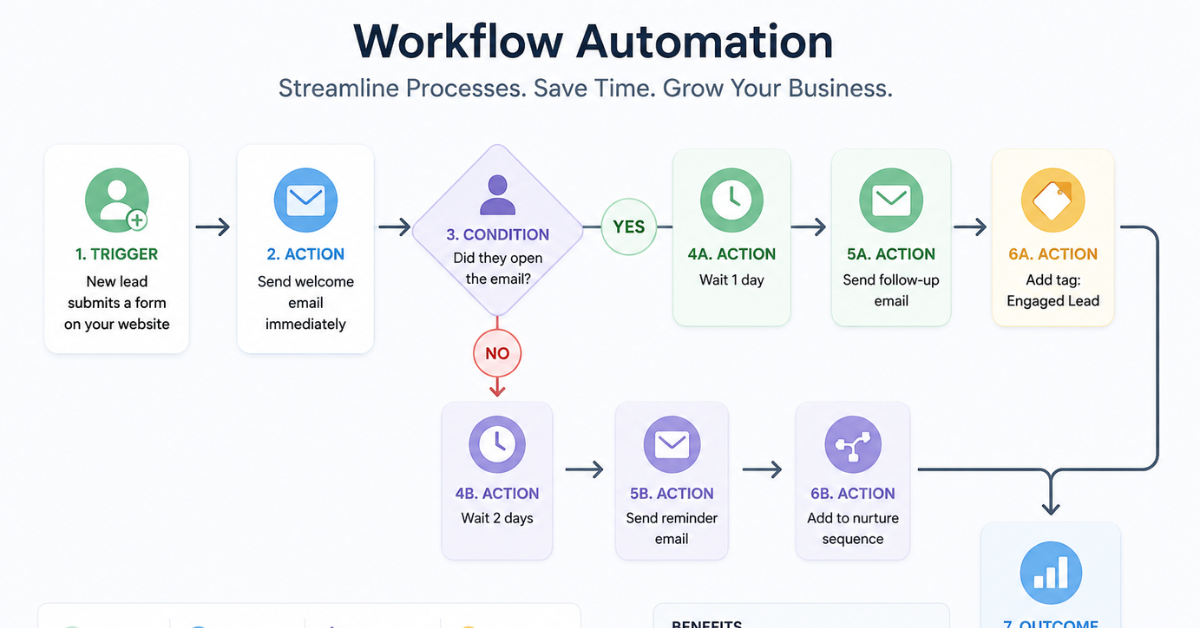
An AI chat assistant on your website can greet visitors, answer your most common questions, capture lead information, and hand off to a real person only when needed. An automated booking flow can take someone from 'I'm interested' to 'appointment confirmed' without anyone on your team touching it. An email workflow can follow up with a new inquiry at the right moment, even at 11pm on a Friday.
None of this replaces your people. It frees them. There's a big difference.

Where We See Small Businesses Leave the Most Time on the Table
After years of working with salons, service businesses, churches, and small companies across Illinois, we've seen the same patterns. The biggest time leaks are almost always the same: answering the same questions over and over, following up too slowly with new leads, and scheduling that requires too many back-and-forth messages.
These aren't glamorous problems. But they're costly ones. A lead who has to wait two days for a reply is often already gone. A potential client who couldn't find your hours on your website didn't call - they Googled your competitor.
Automation closes those gaps. Not perfectly, and not all at once - but practically and measurably.
For Churches, the Problem Is Often the Same - Just the Vocabulary Changes
We've worked with church leaders who are stretched impossibly thin. They want to reach more people, respond to more visitors, and keep their congregation informed - with a staff of two or three people running everything.
That's exactly why we built Bonfire, our AI chat platform designed specifically for churches and mission-driven organizations. It handles the first touchpoint - the visitor who lands on your site at midnight wondering about your service times or small groups - so your staff doesn't have to.
Here's what that looks like in practice. A church running weekend services and a midweek small group program gets visitor inquiries at all hours - Sunday afternoon, Wednesday night, Saturday morning when someone's deciding whether to show up the next day. Before Bonfire, those messages sat in an inbox until Monday. With it, the visitor gets a real answer in seconds, feels welcomed, and is far more likely to walk through the door. The pastoral team didn't change. The first impression did.
Eric's background in ministry shapes how we think about this. It's not about replacing the pastoral relationship. It's about making sure fewer people fall through the cracks before they ever get there.
Automation Works Best When It's Built Into Your Website - Not Bolted On
One thing we've learned: the businesses that get the most out of AI automation are the ones where the website and the automation were built to work together. When your site is integrated with your booking system, your CRM, your chat tool, and your email workflows, you start to get a clear picture of what's actually happening with your customers.
That's why we don't just hand someone a chatbot and walk away. We look at the whole picture - website, workflows, communication - and build automation that fits how your business actually operates.
Where to Start If You're Curious About Automation for Your Business
Start with the most annoying repetitive task your team handles every week. If the answer is 'answering the same questions on the website,' that's where we'd start too. If it's scheduling, we'd look at a booking automation. If it's following up with new leads, email workflows might be the move.
We don't believe in big complicated AI deployments just for the sake of it. We believe in small, smart systems that make your business easier to run. Start small, dream big - it's how we operate, and it's how we'd help you approach automation too.
Curious what AI automation could actually do in your business? Let's map it out together.
If you're a church leader trying to reach more people without burning out your staff, that's exactly why we built Bonfire. See how it works.